
Traveling with Pets on a Private Jet: What to Know Before You Fly
For many owners, a pet isn't luggage — it's family. Yet anyone who has tried to book a dog, cat, or larger animal on a commercial airline knows the process can be stressful: cargo hold restrictions, breed bans, carrier size limits, and the anxiety of not knowing how your animal is being handled out of sight. Private jet charter removes almost all of that uncertainty. Your pet stays with you, in the cabin, for the entire flight. But flying with an animal on a chartered aircraft still involves planning, and knowing what to expect makes the experience smoother for everyone on board — including the flight crew and other passengers.
Why Charter Is Different for Pet Owners
On a commercial flight, most pets that aren't small enough to fit under a seat are relegated to the cargo hold, subject to airline-specific weight and breed restrictions, temperature embargoes, and separate booking systems. On a private charter, there is no cargo hold placement for pets — your animal rides in the cabin with you, typically at your feet, on the seat beside you, or in a carrier you bring aboard. There's no gate agent measuring a carrier against a template, no breed list to check, and no separate ticketing process. The trip is arranged around your itinerary, and the animal is simply part of your party.
That said, every aircraft in a charter fleet is operated by an FAA Part 135 certificated operator (or Part 121 or foreign CAA equivalent, depending on the trip), and each operator sets its own pet policies regarding carriers, restraint during taxi/takeoff/landing, and cabin behavior expectations. Your charter specialist will confirm the specific operator's requirements before the trip is booked, so there are no surprises at the airport.
Choosing the Right Aircraft for Your Pet
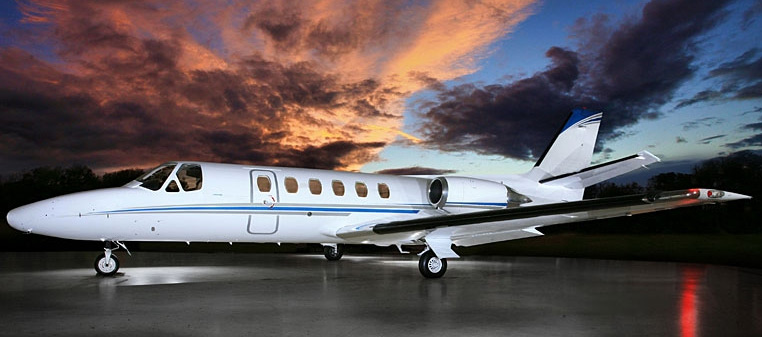
Cabin size and layout matter more than people often expect when a pet is joining the flight. A single small dog in a soft-sided carrier can comfortably travel on a light jet like a Phenom 300 or Citation II. But if you're traveling with a larger breed, multiple animals, or want the dog to have room to lie down and move around during a longer flight, a mid-size or super mid-size cabin — something like a Citation Latitude, Citation X, or Challenger 300 — offers meaningfully more floor space and a quieter cabin. For families relocating with multiple pets, or for owners transporting larger dogs alongside a full travel party and baggage, a large-cabin aircraft such as a Gulfstream IV/450, Falcon 2000, or Challenger 604 provides the room to keep pets, people, and luggage comfortable without compromise. Your charter specialist will factor pet size, temperament, and number of animals into the aircraft recommendation, alongside passenger count and route.
Health Documentation and Cross-Border Travel
Even without TSA pet screening lines, documentation still matters — especially for international trips. At minimum, expect to need:
- Proof of current rabies vaccination and general health records
- A health certificate issued by a licensed veterinarian, typically required within a set window before travel
- Country-specific import permits, quarantine exemptions, or microchip verification for international destinations
- Any state-specific entry requirements if you're crossing into jurisdictions with their own agricultural or animal health rules
Requirements vary widely by destination country and can change, so this is an area where working with a broker who coordinates trip logistics for a living pays off. Studio Jet's charter specialists help clients understand what documentation the destination will expect and build the necessary lead time into the trip plan, rather than leaving it to be discovered at check-in.
Cabin Etiquette and Crew Coordination
Because you're often sharing a private cabin with other passengers — colleagues, family, or other travelers on a shared charter — it's worth communicating in advance if a pet will be aboard. Most operators will ask about pets during trip confirmation so the crew can prepare the cabin appropriately, including any pet relief or feeding logistics for longer flights. Owners should also plan for their animal's comfort during taxi, takeoff, and landing, including a secure carrier or harness if the operator requires restraint during those phases. A well-exercised pet before boarding and a familiar blanket or toy in the carrier go a long way toward a calm flight, especially for animals unaccustomed to air travel.
Booking Timeline and What to Ask For
Pet travel is one more reason to book charter flights with reasonable lead time rather than at the last minute, particularly for international itineraries where health certificates and permits have specific validity windows. When you reach out to arrange your flight, let your charter specialist know upfront: the type and size of pet, number of animals, whether it's a domestic or international trip, and any temperament considerations. That information shapes both the aircraft recommendation and the pre-flight checklist your specialist will prepare.
Pricing for any charter trip — with or without a pet aboard — depends on aircraft category, route, seasonal demand, and trip specifics, so we always recommend requesting a quote rather than relying on rough estimates.
Fly With Confidence, Together
After 17-plus years arranging private charter flights, we've learned that the details matter — and traveling with a pet is exactly the kind of detail that benefits from a dedicated specialist rather than a generic booking form. Studio Jet works with FAA Part 135 certificated operators across a wide range of aircraft, from light jets to large-cabin options, so we can match the right cabin to your pet, your party, and your route. If you're planning a trip with a four-legged companion, call us at 818-769-3535 or visit our request a quote page to start planning a flight where your whole family — pets included — travels together, comfortably and safely.