
Empty Leg Flights Explained: How They Work and When to Book
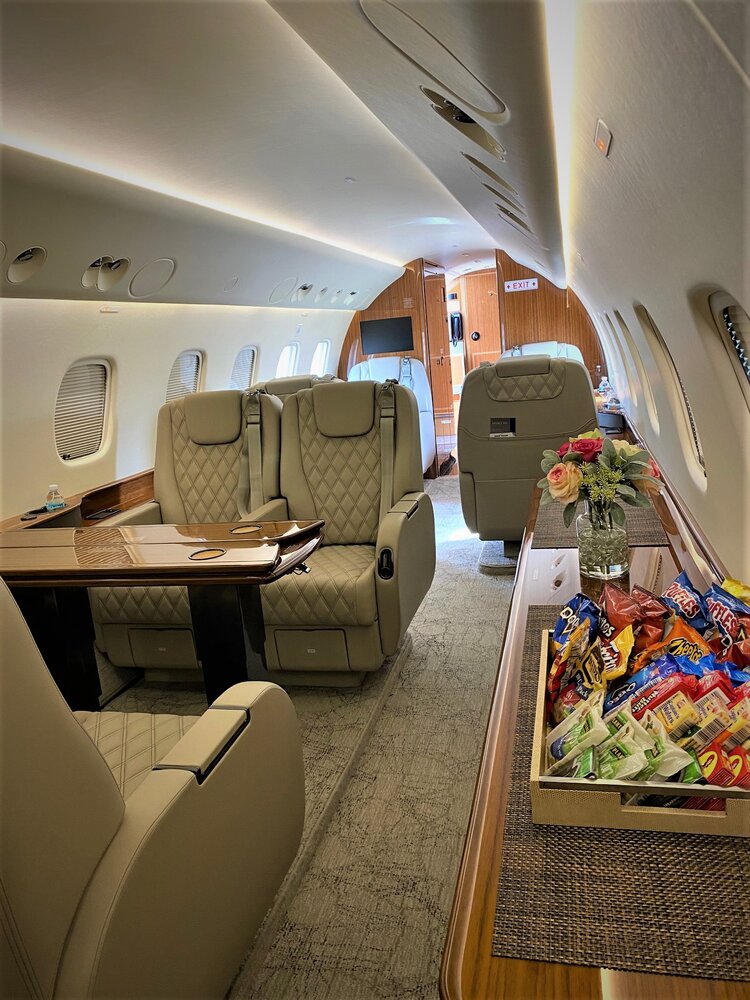
If you've spent any time researching private aviation, you've probably come across the term "empty leg flight" and the promise of flying private at a fraction of the usual cost. The concept is real and the savings can be significant — but empty legs also come with constraints that catch first-time flyers off guard. Here's how they actually work, and how to know when booking one makes sense for your trip.
What Is an Empty Leg Flight?
Every private charter flight has to get the aircraft to the passenger's starting point and, often, back to its home base or on to the next trip afterward. An empty leg is the repositioning flight — the segment where the aircraft flies with no paying passengers aboard. For example, if a Challenger 605 flies a group from Los Angeles to Aspen for a long weekend, the aircraft may need to return to Los Angeles (or reposition to its next scheduled trip) with an empty cabin. That return flight is the empty leg.
Because the operator is flying the aircraft regardless of whether anyone is on it, there's a strong financial incentive to fill that seat with a paying passenger rather than absorb the full cost of an empty repositioning flight. That's where the savings come from — you're not getting a discount because the flight is somehow lesser or less safe, you're benefiting from the operator's desire to offset a cost they'd otherwise incur anyway.
Why Empty Legs Cost Less
On a standard round-trip charter, the quoted price typically reflects the full cost of flying the aircraft out and back, along with crew time, fuel, and other operational costs. An empty leg only needs to cover incremental costs for that one-way flight, since the aircraft was flying that route anyway. Pricing on these trips varies by aircraft type, route, and how close to departure the flight is being booked, so there's no fixed discount percentage to expect — your Studio Jet charter specialist can tell you what a specific empty leg is likely to cost relative to a standard one-way charter on that same route and aircraft.
The Trade-Offs: What You're Giving Up
Empty legs aren't simply "cheaper private flights" — they come with real limitations that are important to understand before you build travel plans around one:
- Fixed routing. You're flying the exact route the aircraft is already scheduled to fly — point A to point B, on a set date. You can't request a different city pair.
- Limited flexibility on timing. Departure windows are usually tight, often tied to when the original charter trip concluded. Empty legs are not well suited to travelers who need precise control over departure time.
- Short notice. Many empty legs surface with only a few days', or even hours', notice, since they depend on how another client's trip was booked.
- Cancellation risk. If the original paying charter that created the empty leg changes its schedule or cancels, the empty leg can disappear or shift. These opportunities are inherently less certain than a dedicated charter booked specifically for your itinerary.
- Aircraft type isn't guaranteed. You take whatever aircraft happens to be repositioning — you won't get to select between, say, a Phenom 300 and a Gulfstream IV for the same empty leg.
None of this makes empty legs a lesser way to fly — every empty leg is still operated by an FAA Part 135 (or equivalent) certificated operator under the same safety and maintenance standards as any other charter. The trade-off is strictly about flexibility and certainty, not safety or aircraft condition.
When Booking an Empty Leg Makes Sense
Empty legs work best for travelers who have flexibility built into their plans. A few scenarios where they're worth watching for:
- Flexible personal travel. If you're planning a trip to a destination like Aspen, Scottsdale, or Nantucket and your dates aren't locked in, an empty leg can let you take advantage of a route that happens to be available.
- One-way trips. Since empty legs are inherently one-way, they're a natural fit if you only need transportation in a single direction and can make separate arrangements for the return.
- Opportunistic business travel. If your meeting schedule can flex by a day in either direction, an empty leg on a relevant route can turn an otherwise commercial itinerary into a private one.
- Testing an aircraft class. Travelers curious about flying in a super mid-size cabin like a Citation X or Challenger 300, or a large-cabin aircraft like a Falcon 900 or Gulfstream IV, sometimes use an empty leg as a lower-commitment way to experience it.
If your trip has a fixed date, a specific routing requirement, or you're traveling with a group that needs a guaranteed aircraft type and cabin size, a standard charter booking — quoted specifically for your itinerary — is almost always the better fit.
How to Actually Book One
Empty legs move fast and availability changes constantly, which is where having a dedicated charter specialist matters most. At Studio Jet, we don't just publish a static list and leave you to guess — your specialist tracks real-time availability across our network of Part 135 operators and can tell you honestly whether an empty leg fits your dates, or whether a standard charter quote will actually serve you better. Pricing on any flight, empty leg or otherwise, always depends on aircraft, route, and season, so the fastest way to get a real answer is to ask.
With 17-plus years arranging charter flights, Studio Jet has seen firsthand how empty legs can deliver outstanding value for the right traveler — and how they can create headaches for the wrong one. If you want a straight answer about whether an empty leg makes sense for your next trip, or you'd simply like a transparent, quote-based price on a dedicated charter, call us at 818-769-3535 or visit our request a quote page. A dedicated specialist will walk you through your real options before you book anything.