
Flying Private for Business: Making the Most of Time in the Air
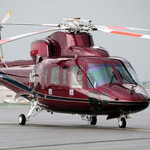
For executives running tight schedules across multiple cities, the value of private aviation isn't measured in comfort alone — it's measured in hours reclaimed. A business traveler flying commercial loses time at every step: arriving early for security, waiting at gates, connecting through hub airports, and recovering from delays that cascade across a whole itinerary. Chartering a private aircraft removes most of those friction points, but only if you know how to use the time you're buying. Here's how experienced business travelers structure their private flights to actually get work done — not just get from point A to point B.
Treat the Airport Itself as Reclaimed Time
The biggest efficiency gain in private travel often happens before the aircraft ever leaves the ramp. Charter flights typically depart from fixed-base operators (FBOs) rather than commercial terminals, which means arrival windows measured in minutes, not hours. There's no TSA line, no gate change, and often no need to check in more than 15–30 minutes ahead of departure. For a business traveler, that alone can convert what used to be a half-day commitment into a tight, predictable block of time that fits neatly around client meetings on both ends of the trip.
Match the Aircraft to the Actual Work You Need to Do
Not every trip calls for the same cabin. A quick regional hop with one or two colleagues might be well served by a light jet like a Phenom 300 or a Citation II — efficient, nimble into smaller airports, and perfectly adequate for a short working session or a quiet call before landing. A cross-country trip with a full team, printed materials, and back-to-back calls is a different equation entirely. That's where a super mid-size aircraft such as a Challenger 300 or Citation X, or a large-cabin option like a Gulfstream IV/450 or Falcon 900, earns its keep — more stand-up room, more stable cabin space for spreading out documents, and enough range to avoid a fuel stop that would otherwise interrupt a working flow. Turbo-props like the King Air 350 or Pilatus PC-12 are worth considering for shorter regional legs into smaller strips near a facility or job site that larger jets simply can't reach.
Because Studio Jet is a charter broker with access to a wide range of aircraft from light jets and turbo-props up through large-cabin and long-range jets, the aircraft gets selected around your itinerary and workload — not the other way around.
Build the Itinerary Around Your Meetings, Not Airline Schedules
One of the most underused advantages of chartering is the ability to set your own departure time. A same-day round trip — fly out early, meet, fly home that evening — is often realistic on private aviation in a way it rarely is commercially, because you're not waiting on a fixed schedule built for the mass market. This matters for how you plan the work itself: you can schedule a departure right after a morning close call, or land close enough to a meeting time that you walk in with minutes to spare instead of hours of buffer. Multi-city trips benefit even more. A single day visiting two or three markets, each with a working session in between, is genuinely achievable when the aircraft and crew are waiting on your timeline rather than the reverse.
Use the Cabin as a Mobile Office — Deliberately
A private cabin is one of the few environments where you control the interruptions completely. There's no seatmate, no beverage cart pausing your call, and generally reliable connectivity depending on the aircraft and route. Business travelers who get the most out of their flight time treat it like a scheduled work block: calls lined up in advance, materials organized before boarding, and a clear sense of what needs to be finished by touchdown. Mid-size and larger cabins — a Citation Latitude, Hawker 900XP, or Gulfstream V/550, for example — offer enough room to hold a small working meeting in the air, not just sit quietly with a laptop.
Plan for the Return Leg, Not Just the Outbound
Business travelers sometimes optimize the trip out and treat the trip home as an afterthought. That's a mistake. The return leg is often where private aviation delivers its biggest advantage, because it lets you leave a meeting at the actual moment it ends rather than the moment a commercial schedule demands. Planning your day around a flexible departure window — rather than racing to make a fixed flight time — frees you to extend a productive meeting, squeeze in one more conversation, or simply decompress before the next morning's obligations.
Every Trip Starts With the Right Questions
Getting real time-value out of a charter flight starts with a conversation, not a quote form filled out in isolation. At Studio Jet, every trip is handled by a dedicated charter specialist who works through your schedule, the number of travelers, the airports involved, and what you actually need to accomplish in the air before recommending an aircraft. Pricing varies by aircraft type, route, and season, and every operator we work with is an FAA Part 135 (or equivalent) certificated carrier — safety and transparency come first, on every trip, for every client. With 17-plus years arranging charter flights, we've learned that the best itineraries are built around the traveler's actual day, not a generic template.
If you're ready to see what a private flight could do for your schedule, call Studio Jet at 818-769-3535 or visit our request a quote page to start planning a trip built entirely around your time.