What Makes an Aircraft Operator FAA Part 135 Certified
If you've spent any time researching private jet charter, you've probably seen the phrase "FAA Part 135 certified operator" attached to nearly every listing. It's not marketing jargon — it's the single most important credential separating a legitimate charter flight from an unregulated one. Understanding what this certification actually requires helps you ask smarter questions, evaluate quotes with more confidence, and know exactly what's protecting you and your passengers in the air. As a charter broker that has spent more than 17 years arranging flights with certificated operators rather than owning or flying aircraft ourselves, we think every client deserves to understand this system before they ever step onto a ramp.
Part 135 in Plain English
Federal Aviation Regulation Part 135 is the section of the Code of Federal Regulations governing on-demand commuter and charter operations. Any company that wants to fly passengers for hire in the United States on a non-scheduled basis — the kind of flying most private charter involves — must hold an Air Carrier Certificate issued under Part 135. This is distinct from Part 91, which governs private, non-commercial flying, and Part 121, which covers scheduled airlines. The distinction matters because Part 135 imposes a materially higher level of oversight than the rules that apply to an owner flying their own aircraft for personal use.
What an Operator Has to Prove Before Certification
Earning a Part 135 certificate is not a paperwork formality — it's a multi-phase process that the FAA takes seriously, and it typically takes months to complete. Operators must demonstrate, among other things:
- An approved Operations Specifications (OpSpecs) manual detailing exactly which aircraft, routes, weather minimums, and types of operations the company is authorized to conduct.
- A qualified management structure, including a Director of Operations, Chief Pilot, and Director of Maintenance who each meet FAA experience and testing requirements.
- Pilot training and currency programs that go beyond the minimums required for private flying, including recurrent training, checkrides, and drug and alcohol testing under an FAA-approved program.
- An approved maintenance program for every aircraft type in the fleet, carried out by certificated mechanics under documented, inspected procedures.
- Proving runs — actual demonstration flights conducted under FAA observation before the certificate is finalized.
Only after all of this is reviewed and accepted does the FAA issue the certificate — and even then, oversight doesn't stop. Certificated operators are subject to ongoing surveillance, recordkeeping audits, and inspections for as long as they hold the certificate.
Why This Matters More Than the Aircraft Itself
Clients often focus on the airplane — cabin size, range, amenities — but the certificate governing who operates that airplane is arguably more consequential to your safety. A beautifully maintained Gulfstream V or Challenger 604 flown outside the structure of a Part 135 (or Part 121, for scheduled carriers) certificate loses the layers of accountability that make charter flying as safe as it is: mandated crew rest rules, standardized maintenance tracking, mandatory drug and alcohol testing programs, and direct FAA oversight of how the operation is run day to day. This is precisely why every flight Studio Jet arranges is flown by an FAA Part 135 (or Part 121, or the appropriate foreign Civil Aviation Authority equivalent) certificated operator, consistent with DOT rules under 14 CFR Part 295 governing how charter brokers must represent flights to the public.
How This Plays Out Across a Real Fleet
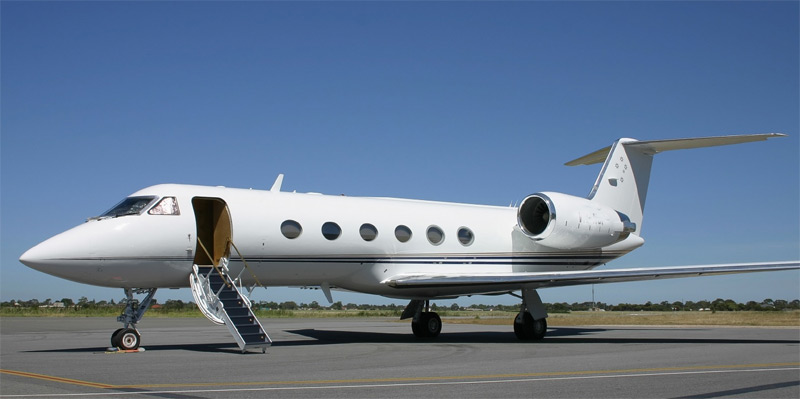
Because Studio Jet is a broker rather than an operator, we aren't limited to one flight department, one maintenance shop, or one pilot pool. We draw from a wide network of Part 135 certificated operators flying everything from light jets like the Phenom 100 and Citation II, to super mid-size aircraft such as the Citation X and Challenger 300, up to large-cabin options like the Gulfstream IV/450 or Falcon 900, plus turboprops like the King Air 350 and Pilatus PC-12, and helicopters such as the Sikorsky S-76. Every one of those aircraft, regardless of size or mission, is flown under the certificate of an operator that has met the same FAA scrutiny described above. That's the common thread that ties a Hawker 800XP repositioning flight and a transcontinental trip on a Gulfstream 650 together: certification standards that don't bend based on aircraft category.
What This Means for You as a Charter Client
When you book with a broker, you should always be able to ask which certificated operator will actually fly your trip, and confirm that operator's certificate is current and in good standing. A transparent broker will tell you this without hesitation. This is part of why we built Studio Jet around a dedicated charter specialist for every trip — someone who vets the assigned operator, confirms the aircraft is appropriate for your mission, and answers questions about crew qualifications and maintenance history before you ever commit. Pricing on any given trip will vary by aircraft category, route, seasonal demand, and operator, so rather than quote generic figures, we always recommend requesting a specific quote for your itinerary so you're comparing real numbers, not estimates.
Fly With Confidence, Not Guesswork
FAA Part 135 certification exists to make sure the operator behind your flight has been vetted, trained, and held accountable to a higher standard than casual private flying allows. Knowing what that certification actually requires — and asking your broker to confirm it — is one of the smartest things you can do before booking a charter. After 17-plus years matching clients with certificated operators across a wide range of aircraft, we've built our business on exactly that kind of transparency. Call us at 818-769-3535 or visit our request a quote page to speak with a dedicated charter specialist about your next trip.