
What to Expect When You Charter a Private Jet
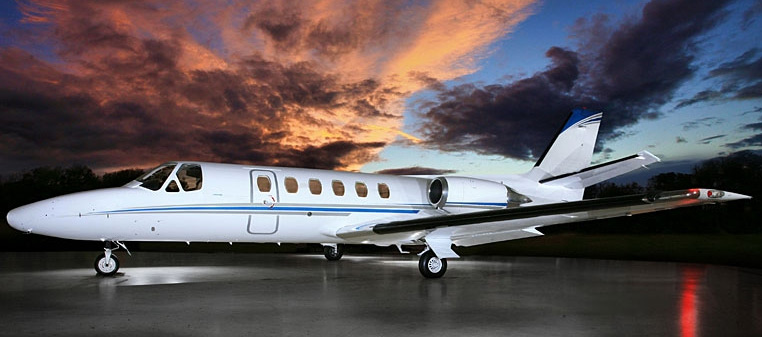
Chartering a private jet for the first time can feel like an opaque process — unfamiliar terminology, unclear pricing, and a lot of aircraft names you've never heard of. In reality, once you understand how the pieces fit together, it's a remarkably straightforward way to travel. Here's what actually happens, step by step, when you work with a charter broker like Studio Jet to book a flight.
It Starts With a Conversation, Not a Catalog
Unlike booking a commercial flight online, chartering begins with a conversation. You'll tell your charter specialist your departure and arrival airports, preferred dates and times, number of passengers, and any special needs — pets, extra baggage, specific catering, ground transportation on arrival. From there, your specialist narrows down which aircraft in the available market actually make sense for your mission.
This matters because not every jet is right for every trip. A short regional hop for two passengers might be perfectly served by a turbo-prop like a King Air 350 or Pilatus PC-12, while a transcontinental trip for a larger group may call for a long-range large-cabin aircraft like a Gulfstream IV/450 or a Challenger 605. Studio Jet has access to a wide operator network spanning light jets (Phenom 100, Citation II, Lear 45), mid-size and super mid-size jets (Citation Latitude, Citation X, Challenger 300, Hawker 800XP), large-cabin jets (Falcon 900, Gulfstream V/550, Gulfstream VI/650), and even helicopters like the Sikorsky S-76 for short-hop or airport-to-destination transfers. Your specialist's job is matching aircraft category to your actual trip — not upselling you into something bigger than you need.
Pricing Is Quote-Based, Not Published
One of the most common questions is simply, "What will this cost?" The honest answer is that private charter pricing varies by aircraft type, route, trip length, seasonal demand, and positioning (the cost of getting the aircraft to your departure airport). There's no universal rate card because no two trips are identical. What you should expect instead is a transparent, itemized quote that breaks down the flight so you know exactly what you're paying for before you commit — no vague bundled numbers. The best way to get an accurate picture for your specific trip is to request a quote directly rather than rely on rough estimates.
Safety Vetting Happens Before You Ever See an Aircraft
A reputable broker does significant work on your behalf before any aircraft is ever proposed. Studio Jet only works with operators certificated under FAA Part 135 (or Part 121 for larger operations, or the equivalent foreign civil aviation authority for international flights), as required under DOT regulations governing air charter brokers. That certification means the operator has met federal standards for maintenance, pilot training and currency, and operational oversight. Your specialist should be able to tell you which operator is flying your trip, the aircraft's maintenance status, and relevant crew experience if you ask. Safety review isn't a one-time checkbox — it's something a good broker continuously monitors across its operator network, trip after trip.
Flexibility Is the Real Advantage
Once your aircraft and operator are confirmed, the operational advantages of chartering become obvious. You can typically depart from smaller regional and executive airports closer to your actual origin and destination, rather than being routed through major hub airports. Arrival time at the airport is typically measured in minutes, not hours — there's no need to arrive two hours early for security lines. Your itinerary can also be adjusted if your plans shift; because you're not sharing the aircraft with other passengers on a fixed schedule, departure times can often be moved to match your needs rather than the other way around. This is especially valuable for multi-city business trips, time-sensitive personal travel, or group travel where coordinating everyone's schedule around a commercial departure simply isn't practical.
What the Day of Travel Actually Looks Like
On the day of your flight, you'll typically arrive at a private FBO (fixed-base operator) terminal rather than a commercial terminal. Check-in is minimal — your identification is verified, your bags are loaded, and you board when you're ready. Catering, if requested, is already on board. Ground transportation can be arranged in advance so a car is waiting curbside at your destination. Throughout the process, your dedicated charter specialist remains your single point of contact, handling any last-minute changes — a weather delay, a shifted meeting time, an added passenger — so you're not left coordinating directly with the operator or FBO.
Choosing the Right Broker Matters
Because a broker doesn't own the aircraft, the real value it provides is in vetting operators, negotiating on your behalf, structuring transparent pricing, and being accountable when something needs to change. Studio Jet has spent more than 17 years building relationships across a broad network of certificated operators and aircraft types, which means your specialist can typically present several realistic options for your trip rather than a single take-it-or-leave-it quote. That matters most when your plans are time-sensitive or when you need an aircraft type suited to a specific runway, cabin size, or baggage requirement.
Chartering a private jet doesn't need to be a mystery — it's a process built on clear communication, careful aircraft matching, and rigorous safety standards, with a transparent quote at the center of it all. If you're planning an upcoming trip and want to see what aircraft options and pricing look like for your specific route and dates, call Studio Jet at 818-769-3535 or visit our request a quote page to get started with a dedicated charter specialist today.